
Running a SaaS business is easier when your subscriptions, billing rules, and renewals all move in a predictable rhythm. As your customer base grows, keeping track of who is on which plan, how they pay, and when they renew becomes a central part of day to day operations. That is where subscription management comes in.
This guide walks through what subscription management actually involves, why it matters for revenue stability, and the challenges most teams hit as they scale. You will also find a breakdown of the most widely used tools in 2025 so you can choose a platform that fits your pricing model, customer volume, and internal workflow.
Whether you are building your first billing setup or replacing a system that can no longer keep up, this guide will help you understand the essentials and plan your next steps with confidence.
What is SaaS subscription management?
SaaS subscription management is the set of processes a company uses to run its recurring plans. It covers sign ups, renewals, billing rules, payment recovery, and any changes a customer makes during their time with the product. At its core, it keeps recurring revenue organized and prevents confusion for both customers and internal teams.
A quick way to think about it is that subscription management answers three questions:
- Who is subscribed
- What plan they are on
- How and when they pay
Once those pieces are tracked correctly, the rest becomes much easier. Finance teams can keep revenue data clean, support teams can solve billing questions faster, and product teams can understand upgrade and downgrade patterns.
Here is where most SaaS companies rely on subscription management:
- Tracking renewals and upcoming expirations
- Automating billing cycles and invoicing
- Handling failed payments and recovery attempts
- Managing upgrades, downgrades, and add ons
- Monitoring usage limits when plans are metered
For early-stage companies, much of this starts manually. As the customer base grows, the workload multiplies. That is where a proper subscription management system becomes essential, helping the business stay accurate, reduce errors, and understand customer behavior more clearly.
Top benefits of SaaS subscription management
Strong subscription management shapes how stable and predictable your recurring revenue becomes. It also reduces the workload on finance, support, and product teams by giving them clear data and automated billing rules. Here are the key benefits in a format that keeps the section easy to skim.
Clearer revenue visibility
Recurring billing works only when the data behind it is accurate. Subscription management gives you a single place to track active customers, renewal dates, upgrades, cancellations, and payment status. This creates cleaner reporting for forecasting and financial planning.
Fewer billing mistakes
Manual billing creates room for errors. A proper system reduces missed invoices, duplicate charges, and forgotten renewals. Customers are billed on the correct date, with the correct amount, every time.
Better customer experience
When customers can manage their own plan changes, payment methods, and invoices, support tickets drop. This also removes pressure from your team since the customer can handle most tasks through their dashboard.
Lower involuntary churn
Failed payments are a common reason for churn. Subscription management tools usually offer automated retries and reminders. This helps you recover revenue you would have otherwise lost.
Easier plan changes and usage tracking
If your plans have usage based elements or multiple tiers, a subscription system keeps everything organized. It becomes simple to see who is at their limit, who may be ready for an upgrade, and who needs attention before renewal.
Stronger alignment between teams
Finance, success, product, and support teams rely on the same information. Everyone sees accurate subscription data, which reduces confusion and speeds up decision making.
These benefits make subscription management one of the most important building blocks for scaling any recurring software business, especially once customer volume begins to grow.
Major challenges with SaaS subscription management
SaaS subscription management can get complicated quickly once you move beyond a small customer base. Billing rules, renewal cycles, and usage data create plenty of moving parts, and even small gaps in the process can lead to lost revenue or unhappy customers. This section highlights the biggest challenges in a readable, skimmable way.
Keeping subscription data accurate
Customer records change all the time. People upgrade, downgrade, switch payment methods, or let a card expire. If the data is not synced across billing, CRM, and product systems, teams end up working with different information, which leads to mistakes.
Handling failed payments
Involuntary churn is a constant problem. Cards expire, banks block charges, or payments time out. Without proper retry logic or alerts, these failed payments quietly pile up and cut into monthly revenue.
Managing complex pricing models
Tiered pricing, usage-based billing, add-ons, discounts, and free trials all add layers of complexity. The more flexible your pricing becomes, the more pressure there is on the subscription system to handle edge cases.
Keeping renewals predictable
If renewals are not communicated clearly, customers get surprise charges or forget about upcoming payments. This often results in disputes, refunds, or cancellations.
Coordinating across teams
Finance, support, and product all rely on billing data. When subscription information is fragmented, support struggles to answer questions, finance struggles to close the books, and product teams struggle to understand upgrade patterns.
Scaling beyond manual processes
Early-stage companies often start with spreadsheets and simple billing tools. As the customer base grows, these manual workflows become slow and error-prone, which creates friction for customers and heavy admin work for the team.
Together, these challenges show why SaaS companies often outgrow basic billing setups and eventually invest in proper subscription management systems.
Top SaaS subscription management tools in 2025
Looking for recommendations on platforms you can try for your SaaS? These are the top choices in 2025 and beyond.
Chargebee
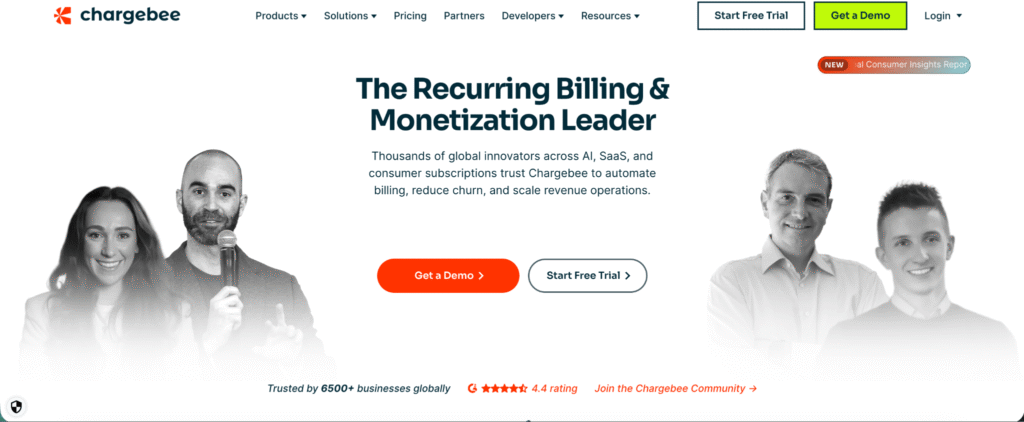
For any SaaS business looking to scale its subscription operations without reinventing billing from scratch.
Top features
- Flexible product catalog with add-ons, usage-based charges, pricing tiers.
- Full lifecycle management (trials, upgrades/downgrades, renewals) with self-serve support.
- Strong global support: multiple currencies, gateways, and compliance
Pros and cons
✅ Very flexible billing models
✅ Mature API and ecosystem
✅ Suitable for international expansion
❌ Some advanced features are locked behind higher pricing tiers
❌ Initial setup can be complex for non-billing teams
Why it stands out: Chargebee gives you a full subscription operations stack from billing through analytics, which makes it easier for SaaS companies to focus on growth rather than reinventing billing.
Stripe Billing
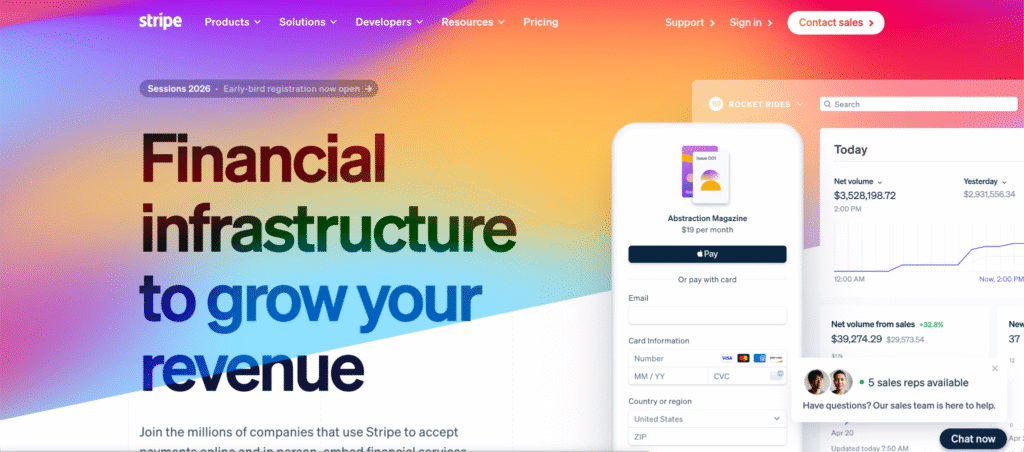
Best for startups and fast-growing SaaS companies that already use Stripe for payments and want to build quickly.
Top features
- Seamless integration with Stripe payments, smooth checkout, and global reach.
- Developer-friendly APIs, usage-based billing, and metered models built in.
Pros and cons
✅ Fast to implement if you already use Stripe
✅ Great flexibility for usage-based models
❌ May require more custom development to handle complex enterprise-grade workflows (accounting, revenue recognition)
❌ Less “out-of-the-box” subscription ops compared with dedicated subscription platforms
Why it stands out: If your payment infrastructure is already on Stripe and your subscription model is evolving quickly, Stripe Billing gives you strong flexibility with minimal friction.
Recurly
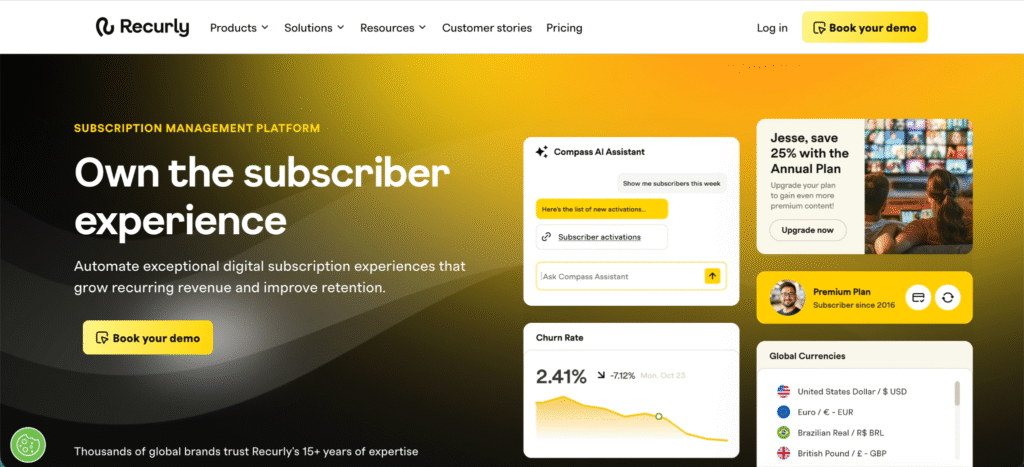
A solid choice for SaaS companies (both B2B and B2C) who want robust subscription and recurring billing capabilities with less customization overhead.
Top features
- Recurring billing for both B2B and B2C, automated payments, subscription lifecycle handling.
- Integrations with payment gateways, analytics, churn-management features.
Pros and cons
✅ Reliable platform with a broad industry usage
✅ Good balance between features and complexity
❌ Might offer fewer “premium” enterprise-finance features than niche billing/finance platforms
❌ Customization of edge-case pricing/usage models may require more effort
Why it stands out: Recurly is a dependable option when you want a mature solution that handles the core subscription workflows without too many bells and whistles.
Zuora
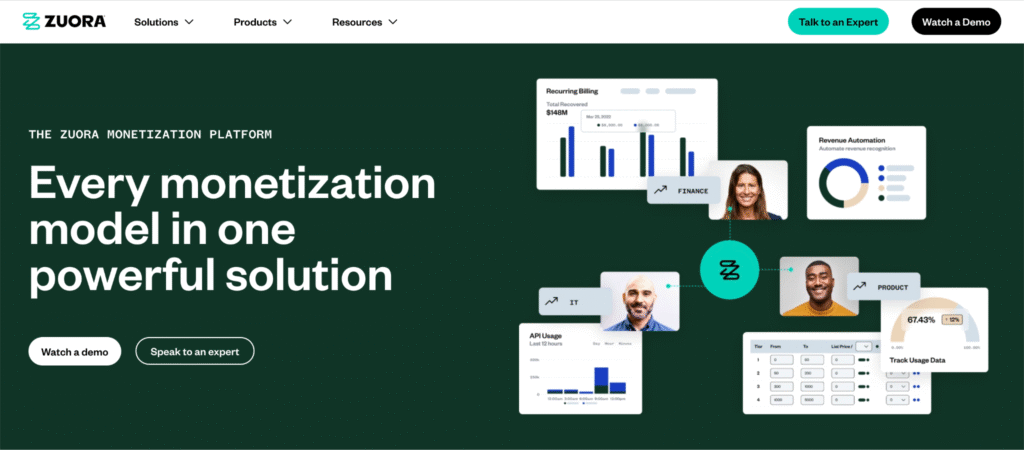
Targeted at large enterprises or highly complex subscription businesses (e.g., multiple products, global operations, advanced billing rules).
Top features
- End-to-end subscription lifecycle: product catalogue, billing, revenue recognition, quoting.
- Strong support for enterprise-scale complexity, compliance, multi-entity setups.
Pros and cons
✅ Designed for scale and complexity
✅ Strong enterprise credentials
❌ Higher cost and longer implementation cycle
❌ Might be overkill for smaller or earlier stage SaaS businesses
Why it stands out: If you’re managing hundreds of thousands of subscriptions, multiple regions, and need advanced financial flows, Zuora offers a heavyweight solution built for that scale.
Maxio
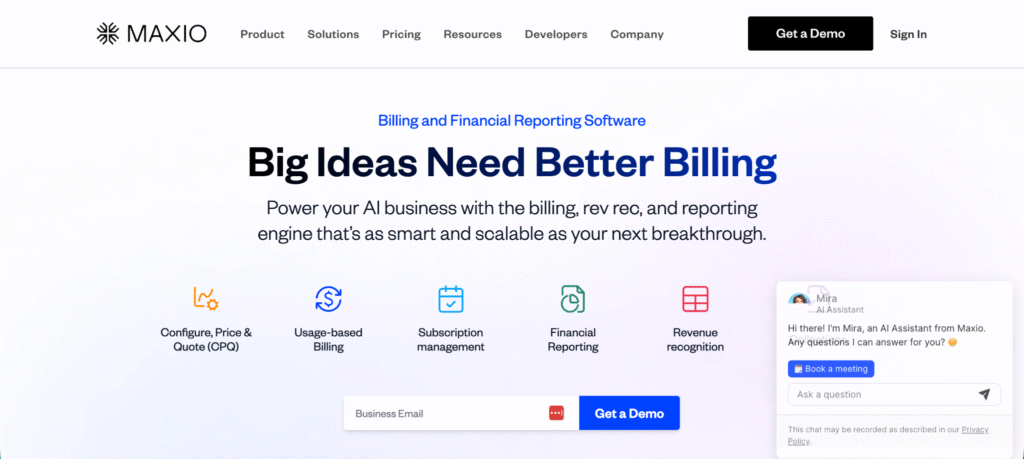
Focused on B2B SaaS companies who need strong integration between billing, finance, and analytics as they scale.
Top features
- Subscription billing plus financial operations (revenue recognition, ARR/MRR tracking, dashboards)
- Self-service portals for customers, flexible pricing models, strong API/webhook support.
Pros and cons
✅ Excellent for finance teams looking for visibility into subscription metrics
✅ Built with B2B subscription complexity in mind
❌ May have steeper learning curve and higher cost than simpler tools
❌ If usage-based or metered models are core, might require pairing with other tools
Why it stands out: If your SaaS business is mid-to-large size, and you need billing + finance + metrics in one platform, Maxio is a strong fit.
Zoho Subscriptions
Good choice for small to mid-sized SaaS businesses seeking a cost-effective subscription platform with wide functional coverage.
Top features
- Recurring billing, usage-based pricing, self-service portal, multi-currency/multi-language support.
- Tight integration with the broader Zoho ecosystem (CRM, accounting).
Pros and cons:
✅ Affordable and feature-rich for its price point
✅ Good especially if you already use Zoho products
❌ Might lack the depth or enterprise-scale capabilities of larger platforms
❌ May require custom work for more complex pricing structures
Why it stands out: If you’re in the earlier growth stage and cost matters, Zoho Subscriptions gives you many of the key features without enterprise-scale cost.
Salesforce Revenue Cloud
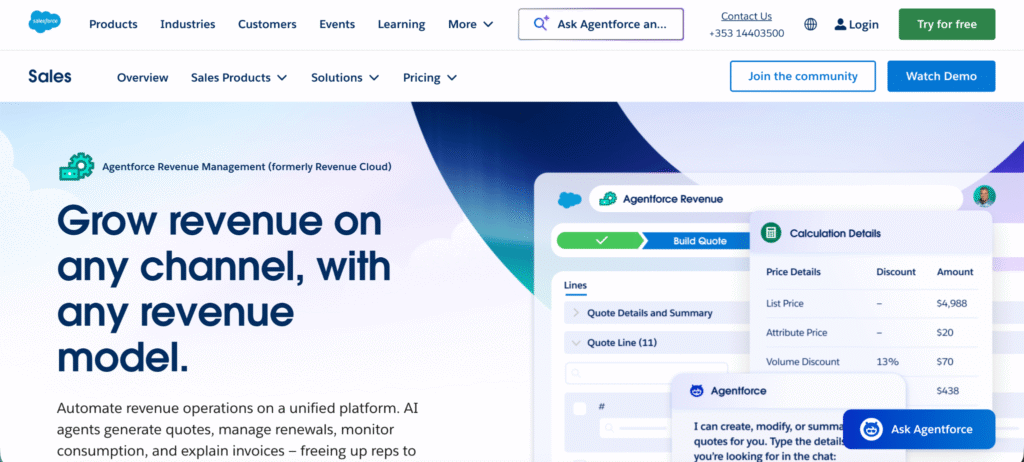
Best suited for organizations already deeply embedded in the Salesforce CRM ecosystem and seeking a unified revenue-lifecycle system covering subscriptions, quoting, billing, and renewals.
Top features
- Native integration with Salesforce CRM, supports static, tiered, usage-based pricing and global payments.
- Strong alignment between sales, finance and operations teams within the same platform.
Pros and cons:
✅ Seamless flow from sell to renew within Salesforce
✅ Ideal for businesses already using Salesforce across other operations
❌ Can be expensive and complex to set up
❌ Might require specialized Salesforce resources or admins
Why it stands out: If your CRM, quoting, and billing are all within the Salesforce ecosystem and you want a unified revenue platform, Revenue Cloud is compelling.
Wrapping up
SaaS subscription management has become one of the most important foundations for running a recurring revenue business. As soon as you move past a handful of customers, the way you handle billing, renewals, upgrades, and failed payments starts shaping your entire revenue stream.
Done well, it brings clarity across teams, keeps customers informed, and reduces the friction that often comes with managing complex pricing and subscription lifecycles.
The right approach is usually a mix of clean internal processes and the right platform for your stage of growth. Early teams benefit from tools that remove manual work, while growing companies need deeper reporting, usage tracking, and reliable payment recovery. Enterprise teams often look for more advanced billing logic and multi-entity support.
No matter where your SaaS sits on that spectrum, investing in proper subscription management pays off quickly. It protects revenue, improves customer experience, and gives every team access to accurate data. The tools highlighted above offer a strong starting point, but the best choice depends on your size, pricing model, and how fast you expect to scale.

